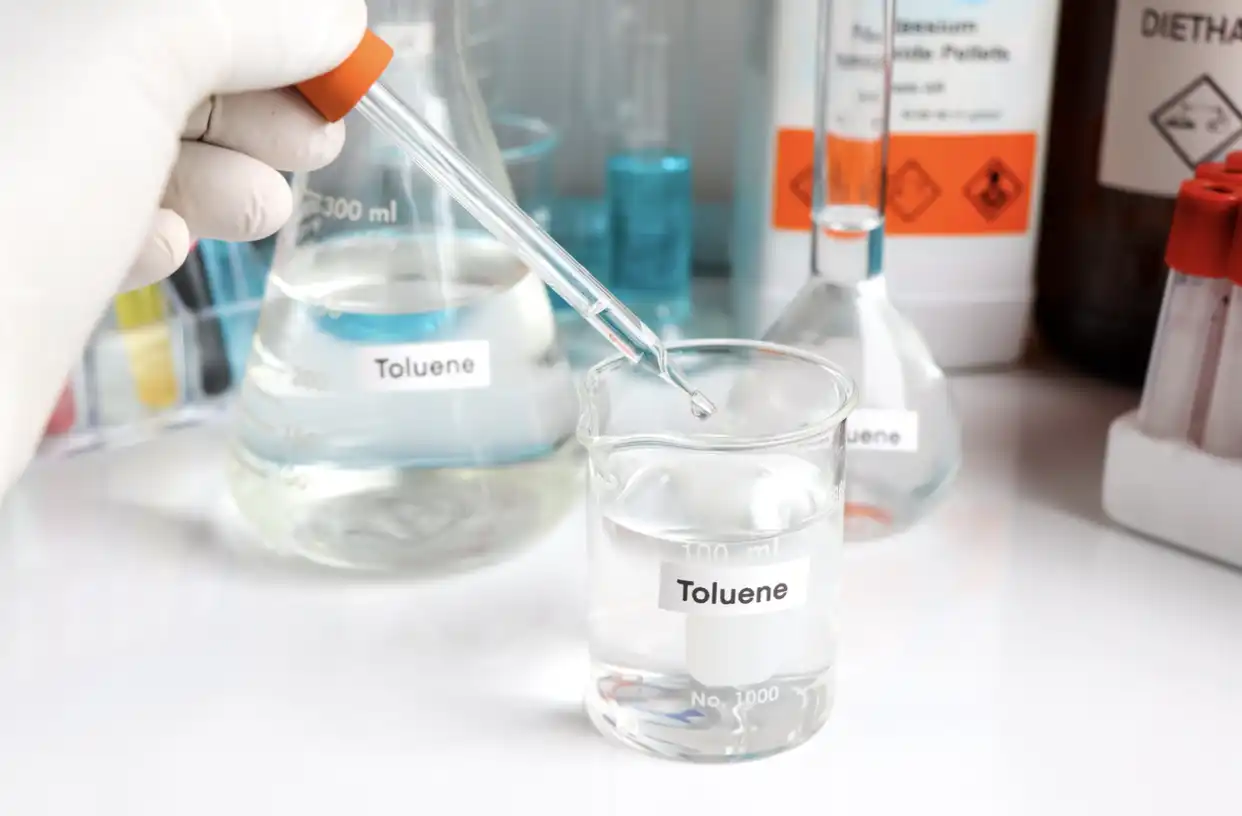

Dibutyl Phthalate (DBP) is an organic compound with the chemical formula C₁₂H₁₈O₄. It is a colorless, oily liquid with a slightly sweet odor, and it is one of the most widely used phthalate esters. Dibutyl phthalate is primarily used as a plasticizer to make plastics more flexible and durable, particularly in polyvinyl chloride (PVC).
Propriétés clés:
- Appearance: Dibutyl phthalate is a colorless to pale yellow, oily liquid.
- Solubilité: It is highly soluble in organic solvents such as alcohols, acetone, and ether but only slightly soluble in water.
- Point d'ébullition: Around 340°C (644°F).
- Viscosity: DBP has a relatively high viscosity, which is important for its role as a plasticizer.
- Odeur: Il a une odeur douce, doux, et quelque peu florale.
- Toxicité: Dibutyl phthalate is toxic when ingested, inhaled, ou absorbé par la peau, particularly with long-term exposure. It is known to have endocrine-disrupting effects and can harm reproductive health.
Utilisations courantes:
- Plasticizer: Le phtalate de dibutyle est principalement utilisé comme plastifiant dans PVC (chlorure de polyvinyle) produits, y compris le plancher, tapisserie, et câbles électriques, pour améliorer la flexibilité, durabilité, et la fonctionnalité.
- Adhésifs et scellants: Il est utilisé dans certains adhésifs et scellants pour améliorer la flexibilité et la résistance à l'adhésion.
- Cosmétiques: DBP est parfois utilisé comme ingrédient dans les produits de soins personnels tels que les vernis à ongles et les cosmétiques pour les rendre plus flexibles et durables.
- Revêtements industriels: Il est utilisé dans la formulation de revêtements industriels pour améliorer la flexibilité et les performances.
- Industrie du caoutchouc: Le phtalate de dibutyle est utilisé dans l'industrie du caoutchouc pour améliorer la flexibilité des produits en caoutchouc.
- Encres et colorants: Il est utilisé dans les encres d'impression et colorants, En particulier ceux utilisés dans l'industrie textile.
- Insecticides: Dibutyl phthalate can be used as an additive in certain insecticides and pesticides.
Health and Environmental Concerns:
- Risques pour la santé: Dibutyl phthalate is classified as a potential endocrine disruptor et reproductive toxin. It has been linked to adverse effects on the liver, kidney, and reproductive system, particularly in animals. There are concerns about its effects on human health, especially for those with prolonged exposure in certain occupational settings or through products like cosmetics.
- Impact environnemental: DBP is toxic to aquatic organisms, and its release into the environment should be minimized. It can persist in the environment, leading to potential bioaccumulation in aquatic species.
- Regulation: Due to concerns about its health and environmental impact, DBP is regulated or restricted in many countries, particularly in children's toys, medical devices, and cosmetics.
CAS Number: 84-74-2
The CAS number for Dibutyl phthalate is 84-74-2, which serves as a unique identifier in chemical databases and regulatory frameworks.
Conclusion:
Dibutyl phthalate is a widely used plasticizer with applications in PVC, adhesives, and cosmetics, but it comes with significant health and environmental concerns, particularly regarding its toxicity and potential to disrupt endocrine and reproductive systems. Efforts are ongoing to regulate its use and find safer alternatives, especially in products that come into direct contact with consumers.