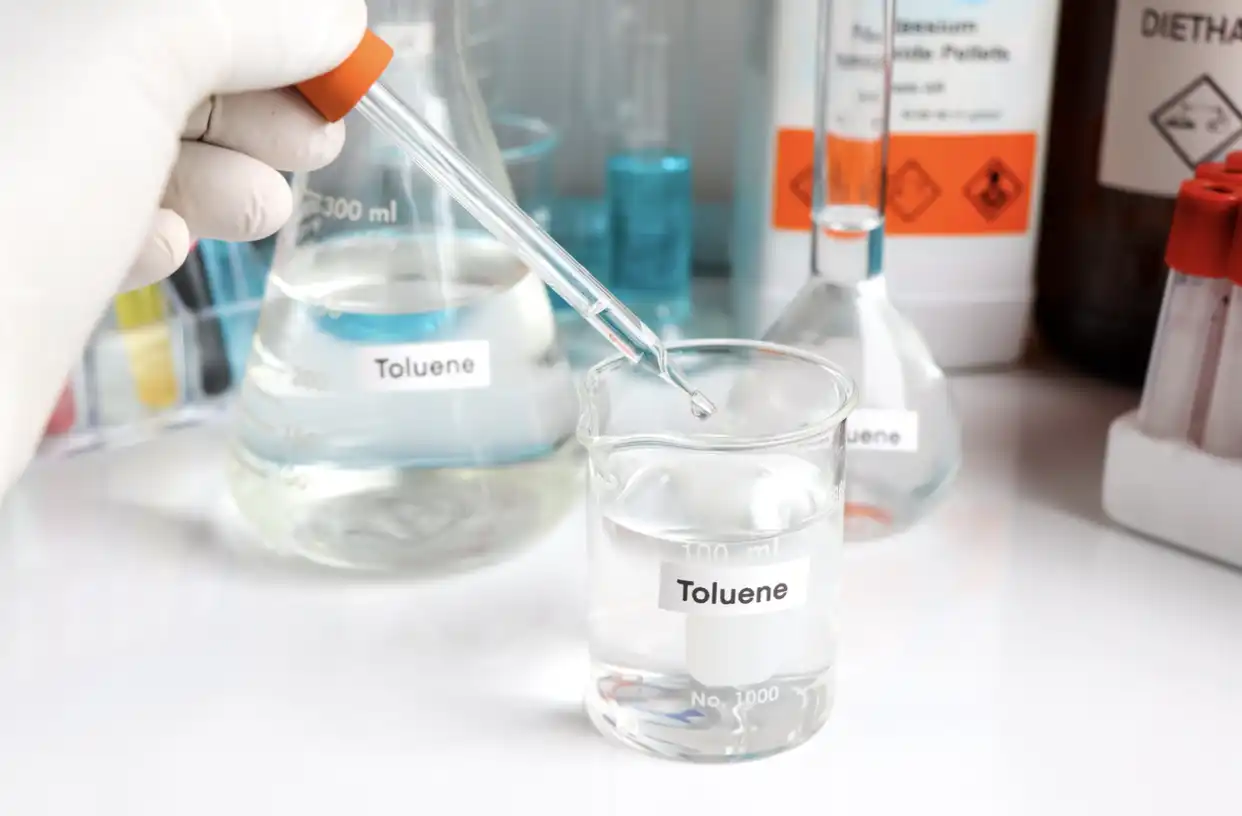

Diethyl Phthalate (DEP) is an organic compound with the chemical formula C₈H₁₀O₄. It is a colorless, oily liquid that is commonly used as a plasticizer and as a solvent in a variety of industrial, consumer, and pharmaceutical applications. Diethyl phthalate is one of the many phthalate esters, which are widely used to make plastics more flexible and durable.
Propriétés clés:
- Appearance: Diethyl phthalate is a colorless, oily liquid with a mild odor.
- Point d'ébullition: The boiling point is around 293°C (559°F).
- Solubilité: It is soluble in alcohols, acetone, and other organic solvents but only slightly soluble in water.
- Viscosity: Diethyl phthalate has a relatively low viscosity, which makes it suitable for use in various formulations.
- Density: Around 1.118 g/cm³ at 20°C.
- Odeur: Il a une odeur douce, pleasant, slightly aromatic odor.
Utilisations courantes:
- Plasticizer: Le phtalate de diéthyle est principalement utilisé comme un plasticizer pour PVC (chlorure de polyvinyle) et d'autres plastiques pour améliorer la flexibilité, la maniabilité, et la durabilité. Il aide à adoucir les plastiques, les rendant plus flexibles et moulables.
- Solvant dans les parfums: Il est couramment utilisé comme un solvant dans l'industrie des parfums et des cosmétiques, car il aide à dissoudre d'autres composants dans les formulations de parfums.
- Cosmétiques: Le DEP est utilisé dans des produits tels que vernis à ongles, crèmes solaires, et lotions. Il améliore la lisseur et la propagabilité de ces produits et aide à stabiliser les parfums.
- Pharmaceutiques: Il est utilisé comme un excipient (ingrédient inactif) dans l'industrie pharmaceutique, principalement dans la formulation de médicaments, en particulier dans les formulations à libération contrôlée ou dans la production de certains types de pilules et de capsules.
- Repellents d'insectes: Le phtalate de diéthyle a été utilisé dans la production d'insectifuges, particularly in combination with other active ingredients.
- Other Applications: It is used as a carrier solvent in paints, revêtements, inks, et cleaning agents.
Safety and Environmental Concerns:
- Risques pour la santé: While Diethyl phthalate is considered less toxic compared to some other phthalates, it has raised concerns due to its potential as an endocrine disruptor. Prolonged or high-level exposure may lead to health issues, especially related to reproductive health and hormone regulation.
- Skin and eye irritation: DEP can cause irritation upon direct contact with the skin or eyes.
- Inhalation risks: Inhalation of vapors may cause respiratory irritation or other health effects in confined spaces.
- Impact environnemental: Diethyl phthalate is toxic to aquatic organisms and can persist in the environment. It is important to prevent its release into water bodies and ecosystems, as it may cause harm to aquatic life.
- Regulatory Status: Due to its potential health risks, the use of DEP, like other phthalates, is regulated in certain products. For example, its use in children's toys and products that come into direct contact with food is restricted in many countries.
CAS Number: 84-66-2
The CAS number for Diethyl phthalate is 84-66-2, which is used for identification in regulatory, scientific, and industrial contexts.
Conclusion:
Diethyl phthalate is a widely used plasticizer and solvent in various industries, including plastics, cosmetics, and pharmaceuticals. While it offers valuable properties like flexibility and solvency, it raises concerns due to its potential endocrine-disrupting effects. As such, its use is subject to regulation, and alternatives are being explored in response to health and environmental concerns.